Study Develops Women's Somatic Experience Inventory to Assess Bodily Experiences
A recent study has presented the Women's Somatic Experience Inventory, a tool designed to assess women's bodily experiences comprehensively. Traditionally, research on women's somatic states has focused predominantly on negative psychological features, particularly those associated with menstruation. However, this new inventory aims to encompass a wider range of bodily experiences, acknowledging that women's somatic states can vary significantly in valence and are influenced by multiple body systems.
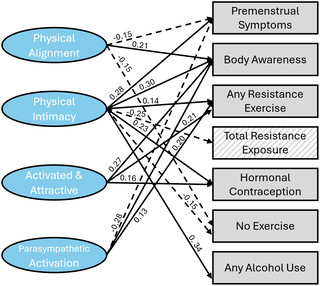
The study involved 300 biologically female university students aged 18 to 25, who rated the frequency and valence of various somatic experiences. An iterative approach was employed, beginning with a systematic review to compile somatic items, followed by variable clustering techniques to refine these items. Confirmatory factor analysis and structural equation modeling were utilized to guide the identification of latent factors. The researchers identified nine unpleasant latent factors, including Kinesthetic Disconnect, Generalized Pain, and Neurological Discomfort, alongside four pleasant factors such as Physical Alignment and Physical Intimacy.
These findings serve as initial proof-of-concept for the inventory, suggesting that validated surveys of premenstrual symptoms, body awareness, and lifestyle behaviors like exercise and alcohol use are associated with the identified factors. The study highlights the importance of understanding women's somatic experiences, which can change across different reproductive life stages and interact with various lifestyle choices.
The Women's Somatic Experience Inventory represents the first comprehensive effort to quantify women's bodily experiences, moving beyond the traditional focus on negative symptoms. With further testing and validation, the identified 73 somatic items and 13 factors could significantly enhance the understanding of women's health and well-being. This research underscores the necessity of developing tools that reflect the full spectrum of women's experiences, ultimately contributing to advancements in women's health science.