Nutrition-Sensitive Interventions Boost Food Security in Bangladesh
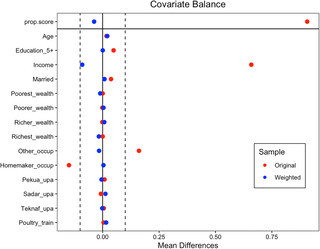
Integrated nutrition-sensitive interventions aim to address the underlying causes of malnutrition, particularly among vulnerable populations. A recent study conducted in Cox’s Bazar, Bangladesh, evaluated the effectiveness of such interventions in improving household food security and dietary diversity among women in host communities affected by the influx of Rohingya refugees. In collaboration with the European Union and UNICEF, the project combined income-generating activities, such as backyard poultry rearing and tailoring, with direct cash support and nutrition education.
The study analyzed data from two rounds of cross-sectional surveys conducted in 2022 and 2024, involving 1,255 women across four upazilas in Cox’s Bazar. The researchers employed propensity score weighting to balance covariates between intervention and control groups, as the interventions were not randomly assigned. The results showed that by 2024, women participating in the interventions had a 53% higher likelihood of achieving household food security compared to 2022. Additionally, there was a marked increase in dietary diversity, with participants showing over two and a half times greater likelihood of meeting adequate dietary diversity standards.
The findings suggest that integrated nutrition-sensitive interventions can significantly enhance food security and dietary diversity among vulnerable women. However, the study's design as a two-repeated cross-sectional survey means that while associations were observed, definitive causal effects cannot be established. The researchers noted potential residual confounding and the influence of time-varying contextual factors, indicating the need for future controlled or longitudinal studies to further explore these relationships.
Scaling Up Nutrition-Sensitive Interventions for Resilient Communities
The interventions were particularly relevant in Cox’s Bazar, a region characterized by economic fragility and frequent natural disasters that exacerbate food insecurity. The study highlighted the importance of addressing both immediate and underlying determinants of nutrition through targeted interventions that not only provide food but also empower women economically and socially.
In conclusion, the evidence from this study supports the scaling up of integrated nutrition-sensitive interventions in similar low-income contexts. By focusing on vulnerable populations, such initiatives can play a crucial role in improving nutritional outcomes and enhancing the resilience of communities facing food insecurity.